
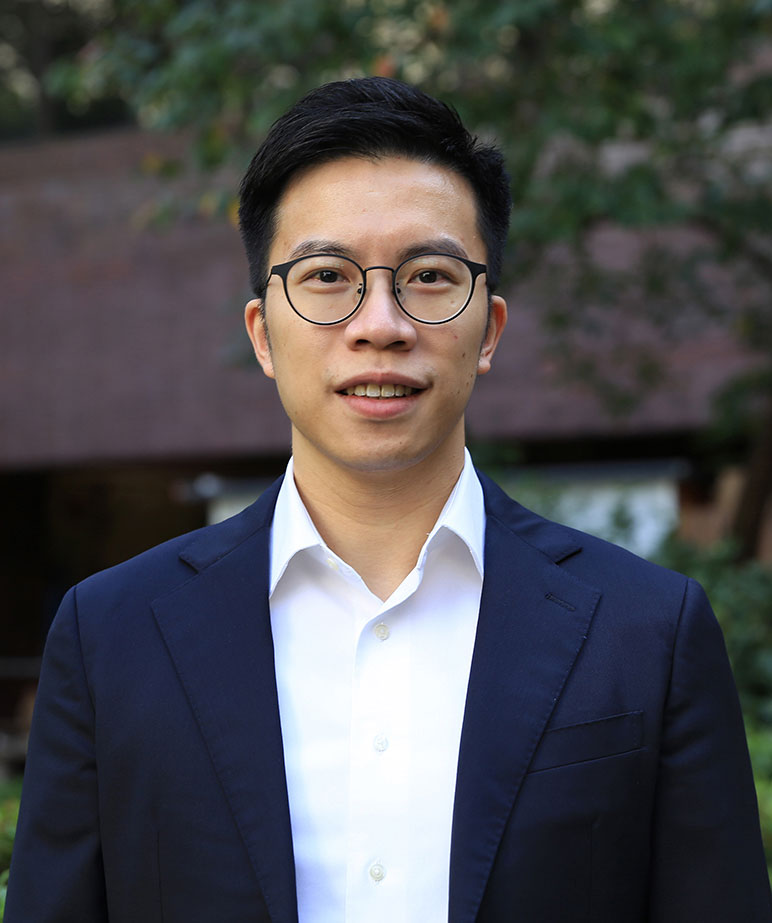
 The Career Development Community Newsletter recently had the opportunity to interview Dr. Wing Fung (Alfred) Chong, the winner of the Society of Actuaries’ (SOA’s) fifth Actuarial Science Early Career Research Award.
Career Development Community Newsletter (CD): What first inspired you to pursue actuarial science and an academic career in it? What early experiences, mentors or events led you into this field?
Alfred Chong (AC): I first encountered actuarial science during my BSc at The University of Hong Kong (HKU), where I double-majored in risk management and mathematics. One pivotal experience was a broadening course, “Directed Studies in Statistics,” supervised by Professor Hailiang Yang. Under his guidance, I read Professor David Dickson’s monograph “Insurance Risk and Ruin,” which became my first real point of contact with actuarial thinking. I was immediately intrigued by how rigorous mathematics could be used to understand and manage risks.
That curiosity led me to take another broadening course, the year-long “Statistics Project,” supervised by Professor Ka Chun Cheung. Through that project, I was introduced to concepts such as dependence, copulas and comonotonicity, and I began to see how these concepts could inform practical problems like asset allocations. Those two early research experiences convinced me that I genuinely enjoyed asking questions at a deeper level and pursuing answers through research.
As a result, I decided to continue with graduate studies—an MPhil in risk management science at The Chinese University of Hong Kong, followed by a joint Ph.D. in actuarial science at HKU and King’s College London. Those years gave me a real taste of academic life and confirmed that research is the path I want to pursue. I remain deeply grateful to my graduate supervisors—Professor Ka Chun Cheung, Professor Gechun Liang and Professor Phillip Yam—for their generous support, their mentorship and the freedom they gave me to explore ideas and grow as a researcher.
CD: When and why did you decide to focus on research rather than—or in addition to—a traditional actuarial career path?
AC: I made the decision during my MPhil, when I completed my first coauthored paper. My undergraduate research experiences were valuable for building foundations and learning how to apply established concepts to specific scenarios. But finishing that first paper showed me something different: research can advance knowledge, even in a small but genuine way, by extending existing ideas and creating new insights rather than only applying what is already known.
Back in my undergraduate studies, I also had internship experience in the industry. I appreciated how directly actuarial work supports real business needs and decisions. However, I realized I was most energized by the academic process: taking a new problem, thinking through it carefully and developing the best possible methodology or answer, even if it takes time. Academia gave me space to pursue that kind of depth, which is why I chose a research-focused career path while still staying connected to practice through applied topics and professional engagement.
CD: As someone within the first 10 years of their academic career when receiving this award, what challenges have you faced, and what motivated you to persevere?
AC: Two challenges stand out for me. First, like many early-career researchers, I’ve had to balance many priorities at the same time: building a publication pipeline; applying for funding; developing teaching skills; mentoring students; establishing collaborations across time zones and disciplines; and contributing professional services, like refereeing, organizing workshops and conferences, and supporting the broader research community. When all these responsibilities accumulate, it can certainly be exhausting. But I also treasure the diversity of academic work: it is intellectually rich, outward-facing and often not confined to one institution; many efforts are ultimately for the benefit of the wider profession. That sense of purpose has helped me persevere, and the experience has also taught me how to prioritize, say no when necessary and keep the long-term view.
Second, a more research-specific challenge is closely tied to my evolving research agenda, something that I’ll touch on later in the interview.
CD: Could you describe the main thread(s) of your research that contributed to winning the Early Career Award? What problems are you trying to solve? Why do they matter to academia and industry?
AC: The common thread across my research is building rigorous, decision-focused frameworks for insurance and risk management, methods that help stakeholders share, allocate and mitigate risk in a way that is mathematically sound and operationally actionable.
My work clusters into five mutually reinforcing streams. First, I study risk sharing and pooling, including optimal designs in centralized and decentralized insurance markets; these ideas have been applied to real flood insurance data to generate policy-relevant insights on affordability and design.
Second, I develop principles for risk aggregation and resource/capital allocation, including game-theoretic approaches that account for competing objectives within organizations. I extended this line to pandemic-era medical resource planning, producing practitioner-facing outputs such as the open-source tool COVIDPLAN.
Third, I work on cyber and privacy risks, focusing on capital management, reserves and the market rationale for incident-specific cyber insurance, informed by real incident data and extensive industry stakeholder engagement.
Fourth, I explore AI in insurance, including deep reinforcement learning and transfer learning for hedging variable annuities, with open-source implementation to support reproducibility and potential adoption.
Finally, I contribute to forward utility preferences and their applications to long-horizon problems in life insurance and retirement, addressing model prespecification risk that is especially important when horizons are measured in decades.
Collectively, these threads matter because they connect foundational actuarial theory to timely, high-impact decisions, from capital allocation and product design to resilience against emerging risks, while producing tools and insights that practitioners can use.
CD: How do you balance academic rigor and practical relevance in your research? The award emphasizes real-world applicability, so how have you bridged theory and practice?
AC: This is indeed the second challenge for me: striking the right balance between academic rigor and practical relevance. While this tension exists in many disciplines, it is especially pronounced in actuarial science because our work is so tightly connected to decisions in the finance and insurance industries.
Early in my academic career, I naturally prioritized rigor; my work was often motivated by theoretical questions and was written primarily for an academic audience. Over time, as I became better acquainted with industry needs and constraints, I began to ask harder questions about implementation: Which assumptions are realistic? What frictions matter in practice? What would it take for a practitioner to use this? Those questions pushed me to evolve my research agenda, not only in terms of topics, but also in terms of research mode.
Today, I deliberately maintain a portfolio across three layers: (1) fundamental research that builds new theory and tools, (2) work that blends theory and application, where the theoretical contribution is paired with operational insight, and (3) proof-of-concept applied research, where the goal is to translate fundamental ideas into interpretable outputs, case studies or tools with which practitioners can engage. The latter two layers are grounded in the first: they help ensure that rigorous ideas do not remain abstract but can be communicated clearly and ultimately generate impact in the actuarial profession.
CD: What recent findings or innovations from your work do you believe have the greatest potential to influence actuarial practices?
AC: One piece of work I believe has strong potential to influence actuarial practice is my recent coauthored paper, “Cyber Risk Assessment for Capital Management.” Using a historical cyber-incident dataset, we show why effective cyber risk management typically requires a balanced strategy combining cybersecurity investment, cyber insurance and reserves, rather than relying on any single lever. Although this three-part approach is often advocated in risk management at a high level, the empirical and quantitative research base has been comparatively thin, particularly in a way that supports capital management decisions.
More broadly, the need for cybersecurity investment connects to a wider theme that has recently regained attention in both academia and practice: risk reduction by policyholders before transferring risk. This renewed interest is partly driven by affordability pressures in several non-life business lines, such as flood and cyber, where rising frequency and severity can push insurers to raise premiums and tighten terms. In response, there is growing emphasis on self-protection and resilience measures that can reduce losses and improve insurability and affordability.
To make research in this area truly practice-relevant, we often need more than the traditional “define a loss random variable and optimize” approach. Meaningful progress requires interdisciplinary inputs, from cybersecurity, engineering and operational risk management, to ensure models reflect real-world constraints, incentives and implementation pathways. That is also where actuarial research can add distinctive value: translating cross-disciplinary knowledge into decision frameworks that are transparent, stress-testable and usable in capital and risk management.
CD: How do you stay current with emerging trends (e.g., emerging risks, artificial intelligence [AI])/machine learning [ML], stochastic modeling) while maintaining depth in your core actuarial research?
AC: I make a deliberate effort to step outside my immediate research niche, not only beyond my current actuarial topic, but also beyond my usual collaborators and even the actuarial community more broadly. I actively listen to how neighboring fields frame their “core problems,” what methods they prioritize and what constraints they work under. This means attending seminars outside my area, reading outside my usual journals and having candid conversations with researchers and practitioners in other disciplines.
Not every interaction leads to a direct collaboration, and some attempts do lead to rejection or a dead end, but the process is still valuable. It broadens my horizon, helps me recognize genuinely emerging trends early and often gives me new language or tools to reinterpret my own actuarial questions. Over time, these external inputs feed back into my core research agenda and, I hope, contribute to stronger ideas for my group and the wider actuarial community.
CD: What are some “lessons learned” you would share with early-career actuaries (students or junior faculty) looking to follow a similar research-focused career path?
AC: Build reusable tools. Aim for each project to leave behind an asset, such as a modeling framework, proof template, dataset pipeline or codebase, that can be reused and extended. This makes your research cumulative, accelerates future projects and makes it easier for others (including practitioners and students) to adopt your ideas.
Also, invest in communication. Clear explanation is not an add-on; it is a multiplier for impact. If you can articulate the decision problem, your contribution and the practical takeaway in plain language while being transparent about assumptions, your work becomes easier to trust, collaborate on and apply.
CD: How important has networking—across academia and industry—been to your success, and what strategies have you found most effective?
AC: Networking has been extremely important to my early-career development, both within academia and across the industry. Having the opportunity to work globally, first in North America and then in Europe (about four years in each), greatly broadened my professional network and helped me build relationships across different research cultures. It also allowed me to know colleagues in a deeper way, not only as names on papers, but as people with shared interests, complementary strengths and practical perspectives. In turn, those relationships have helped others remember me and my work and have opened doors to collaborations and opportunities.
In terms of what works best, I have found conferences to be particularly effective and appreciate the COVID era being past. Presenting research is valuable, but the networking often happens in the “in-between” moments—coffee breaks, lunches, dinners and even excursions—when conversations are more relaxed and genuine. Those interactions are often where future collaborations begin.
CD: What skills (technical, interpersonal or otherwise) do you consider most critical for young actuarial researchers today?
AC: Strong technical skills are the foundation for young actuarial researchers. Without them, even excellent communication or interpersonal skills cannot compensate, because research ultimately depends on rigor, correctness and depth. At the same time, technical ability is most impactful when paired with complementary soft skills, especially communication and collaboration. Being able to explain ideas clearly, work effectively with others and translate results for different audiences helps strong technical work travel further and generate real influence.
CD: What does receiving the Early Career Award mean to you personally and professionally?
AC: I am deeply thankful to everyone who has advised, guided and mentored me, formally and informally, along my actuarial research journey. I am especially grateful to my collaborators and my former supervisors during my research training; their support, generosity and trust have been invaluable.
When I received the news of this award, I was still at Heriot-Watt University, but I had already decided to move back to Hong Kong and return to where my academic journey began. That transition also reminded me how fortunate I have been to work with outstanding colleagues and communities at both the University of Illinois Urbana-Champaign (UIUC) and Heriot-Watt University. I truly would not have reached this stage of my career without their care and support. In many ways, I see this recognition as reflecting not only my efforts, but also the environment and people who helped shape my work. I am proud to share the credit for this milestone with both institutions and with my colleagues there.
CD: How do you plan to build on this recognition? What are your next big goals for research, teaching, collaboration or mentorship?
AC: In the short term, my main goal is to build a sizable and sustainable research team at HKU, one that advances frontier actuarial science while keeping a clear line of sight to real-world relevance. I hope to mentor doctoral students and junior researchers around a coherent agenda on risk sharing and pooling, risk aggregation and resource/capital allocation, AI in insurance and emerging-risk mitigation, and to translate our findings into outputs that are useful both locally and globally. In parallel, I want my teaching to strengthen this pipeline by better preparing students to do research that bridges theory and practice.
In the long term, my big goal is to pursue explicit cross-disciplinary collaborations to tackle emerging risks that cannot be solved within actuarial science alone. Concretely, I hope to work with experts in areas such as cybersecurity and privacy, civil and environmental engineering, and data science/AI to develop methods and decision frameworks that are rigorous, implementable and policy-relevant. Topics I view as especially pressing include cyber risk and operational resilience, climate-related insurance affordability and the responsible use of AI/ML in insurance decision-making. Ultimately, I hope this recognition helps me convene partners across academia and industry to deliver solutions that meaningfully shape actuarial practice.
CD: In your view, how can academia and the actuarial industry best collaborate to address the challenges of emerging risks (climate, longevity, technology, etc.)?
AC: The best collaboration on addressing the challenges of emerging risks happens when academia and industry meet halfway through shared language, shared problems and shared platforms. Academia should not speak only in technical terms; we need to translate research into the language of decisions: what problem it solves, which assumptions matter and what implementation looks like under real-world constraints. Industry, in turn, can be more open to testing innovative methods that already exist in academia, through pilots and co-development, rather than expecting ready-made solutions.
Most importantly, we need dedicated collaboration platforms, joint labs, applied research sprints, shared datasets where possible and co-supervised students that make exchange routine rather than ad hoc. I have seen this model work through initiatives like the Illinois Risk Lab, which I cofounded at UIUC to foster industry-academia collaboration. Finally, because emerging risks are inherently cross-disciplinary (e.g., climate, cyber, or technology), these platforms should connect actuarial science with fields like engineering, cybersecurity, data science and policy; otherwise, solutions become siloed.
CD: What role do you see for early-career actuarial researchers in shaping the future of the profession globally?
AC: Early-career researchers can play a unique role as bridges; they are comfortable with new tools (AI/data) but grounded in actuarial principles like prudence, solvency and interpretability. They can also help globalize the profession by collaborating across regions and sharing methods that transfer across regulatory and market contexts, which is especially important for risks that do not respect borders.
CD: What advice would you give to actuarial students who are curious about combining exam-based credentialing (like ASA/FSA) with academic research?
AC: I finished most ASA examinations when I was pursuing my PhD. I would encourage students to view credentialing and research as complementary. The exams build professional structure and practical literacy; research builds depth and innovation capacity. A pragmatic approach is to plan by season, periods where exams are the focus and periods where research is the focus, rather than trying to maximize both every month. Also, choose research topics that align with exam material whenever possible (e.g., risk theory, pricing, capital allocation), so time reinforces itself.
CD: How do you think actuarial education (undergraduate/graduate) could better prepare students for research-oriented careers or for bridging research and industry needs?
AC: Teach research habits explicitly. Actuarial programs could do more to train students how to do research: reading papers efficiently, identifying a good question and writing clearly. Just as importantly, students should practice reproducibility, replicating results, documenting assumptions and learning how to explain limitations, so their work is credible and buildable.
Integrate computation and data with actuarial decision-making. Students need more opportunities to connect models, evidence, decision, not just learn techniques in isolation. Project-based capstones with realistic constraints (messy data, time limits, regulatory/business considerations) and iterative feedback from practitioners are especially effective in teaching how to translate theory into something usable.
CD: What would you say to encourage someone interested in contributing to actuarial research but worried about time, exam load, or job prospects?
AC: Over time, these small steps compound into a portfolio that signals both technical strength and initiative. The profession increasingly values people who can connect models, computation and real risk decisions, so building research skills complementing examination by spending time is often a career accelerator, not a detour.
This article is provided for informational and educational purposes only. Neither the Society of Actuaries nor the respective authors’ employers make any endorsement, representation or guarantee with regard to any content, and disclaim any liability in connection with the use or misuse of any information provided herein. This article should not be construed as professional or financial advice. Statements of fact and opinions expressed herein are those of the individual authors and are not necessarily those of the Society of Actuaries or the respective authors’ employers.
Wing Fung (Alfred) Chong, PhD, ASA, is an associate professor in the Department of Statistics and Actuarial Science in the School of Computing and Data Science at The University of Hong Kong. He can be reached at chongwf@hku.hk.